Remote ID Explained: What Drone Pilots Really Need to Know
What Is Remote ID and Why Is It Being Introduced?
The UK government has pledged close to £50 million toward drone innovation, including flying taxis and beyond-visual-line-of-sight (BVLOS) development. However, a significant chunk of that funding — over £20 million — is earmarked for a drone identification system designed to track aircraft in real time and assist authorities in prosecuting those who break the rules. Whether you fly a GPS Drone for recreational use or operate a professional 4K camera drone for commercial work, this affects you. Remote ID works by broadcasting key data including the operator’s ID, the aircraft’s serial number, its current position and altitude, the remote pilot’s location, and emergency status. Think of it like a digital number plate for drones. Authorities and approved personnel can access this data live or historically. For legitimate, responsible operators, this level of accountability is not inherently unreasonable. Knowing who is flying what and where does have practical value for managing increasingly busy low-level airspace. The concern, however, is not with identification itself — it is with how Remote ID is being presented. Describing it as a primary safety advancement or a key enabler for BVLOS operations stretches the truth considerably, and that distinction matters for anyone investing in drone technology today.
The Gap Between Safety Claims and Airspace Reality
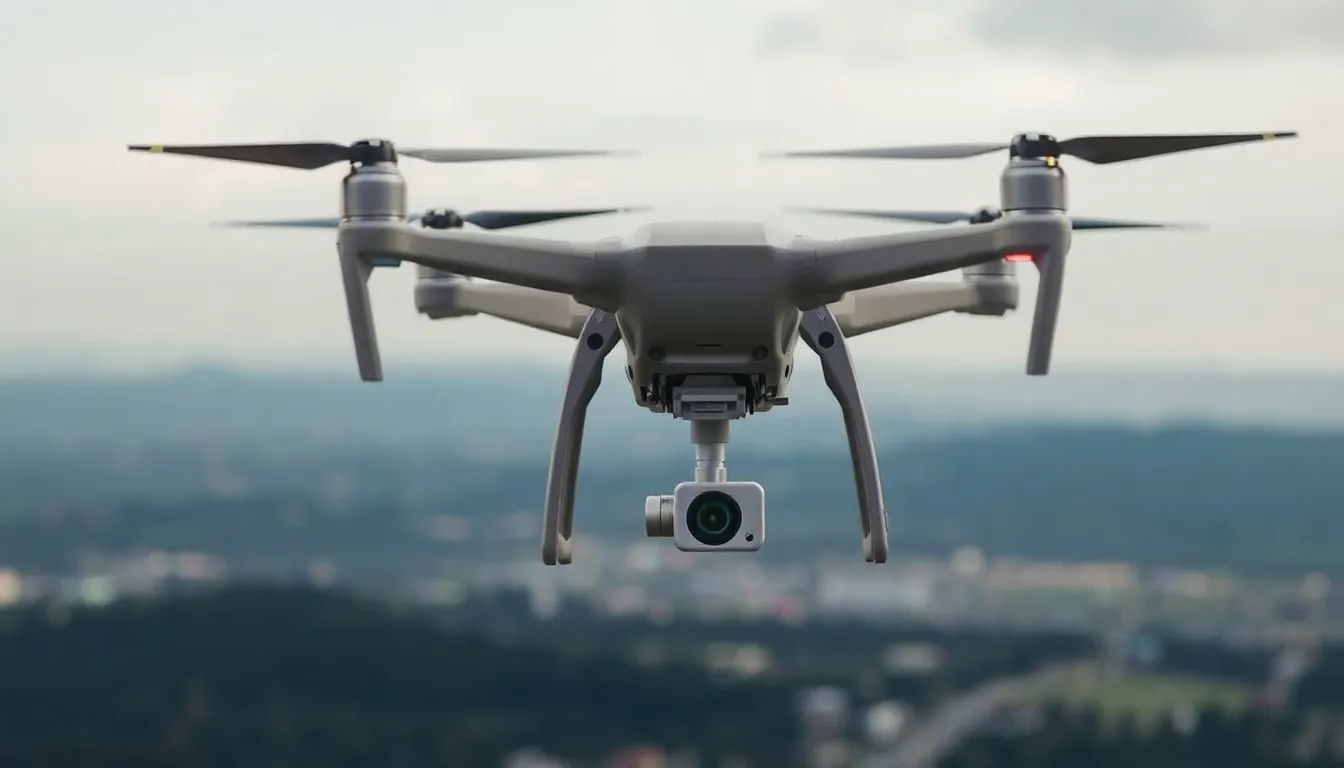
Here is where the analysis gets genuinely interesting for anyone serious about drone operations. Remote ID tells you who a 4K Drone belongs to and where it is. What it does not do is detect a nearby paramotor, alert a pilot to an approaching microlight, or resolve a potential mid-air conflict in real time. True airspace safety — particularly for BVLOS scenarios — depends on interoperable electronic conspicuity: a system where all aircraft, manned and unmanned, can electronically see and be seen by each other. The UK’s Civil Aviation Authority has itself acknowledged that electronic conspicuity strengthens safe airspace integration and is very likely to be essential for future BVLOS operations. Yet while drone operators flying GPS Drone platforms are already being brought under Remote ID requirements, large portions of the manned aviation community — gliders, paramotors, microlights — are still not universally required to carry compatible electronic visibility systems. This imbalance is the core issue. A 4K camera drone can broadcast its identity continuously, but if the aircraft most likely to cause a collision has no compatible electronic presence, the fundamental safety problem remains unsolved. Remote ID alone does not close that gap, and framing it as though it does can create a false sense of progress.
Where Should Investment Actually Be Directed?
For drone pilots, hobbyists, and commercial operators alike, the practical takeaway is this: Remote ID is coming, and compliance will be necessary. If you fly a GPS Drone or a professional 4K camera drone, familiarising yourself with operator ID requirements and broadcast specifications is a sensible step right now. Beyond compliance, though, it is worth understanding what Remote ID will and will not do for you in terms of actual airspace awareness. The technology that would genuinely advance drone safety and unlock commercial BVLOS potential is Detect and Avoid — systems that allow unmanned aircraft to identify and respond to conflicting traffic automatically. Paired with a universal electronic conspicuity mandate covering all aviation categories, this would represent a meaningful leap forward. Critics of the current funding approach argue that directing over £20 million toward an enforcement-oriented ID system, while Detect and Avoid and interoperable conspicuity remain underfunded, reflects misplaced priorities. For those purchasing a 4K Drone or scaling up a drone business, the regulatory landscape will continue evolving rapidly. Staying informed, maintaining proper registration, and understanding the distinction between compliance tools and genuine safety technology will help you fly confidently, legally, and with a clear picture of where the industry is genuinely headed.
Source: Remote ID: an enforcement system dressed up as drone safety
We are a participant in the Amazon Services LLC Associates Program, an affiliate advertising program designed to provide a means for sites to earn advertising fees by advertising and linking to Amazon.com. As an Amazon Associate I earn from qualifying purchases. We also participate in other affiliate programs.