Pentagon’s $500M AI Counter-Drone Deal: What You Need to Know
A Major Investment in AI-Powered Counter-Drone Technology
The U.S. Department of Defense has made a significant move by awarding a contract worth up to $500 million to California-based defense tech startup Perennial Autonomy. The deal, structured as a three-year Indefinite Delivery/Indefinite Quantity agreement, is designed to rapidly scale the deployment of drone-interception systems across military operations both domestically and overseas. Founded by former Google CEO Eric Schmidt, Perennial Autonomy has quickly established itself as a serious player in the defense technology space. Their systems have already been battle-tested in real-world conflict zones, giving military planners a degree of confidence that many newer startups simply cannot offer. The contract covers a suite of AI-enabled platforms, including the Merops interceptor, the Bumblebee quadcopter, and the Hornet midrange strike drone. Each system brings something unique to the table, and together they form a layered counter-UAS capability that the Pentagon clearly sees as critical for modern warfare. For enthusiasts familiar with consumer-grade technology like a 4K camera drone or a GPS Drone, it’s fascinating to see how similar foundational technologies — cameras, sensors, autonomous navigation — are being adapted for high-stakes defense applications at an entirely different scale.
Breaking Down the Key Systems: Merops, Bumblebee, and Hornet
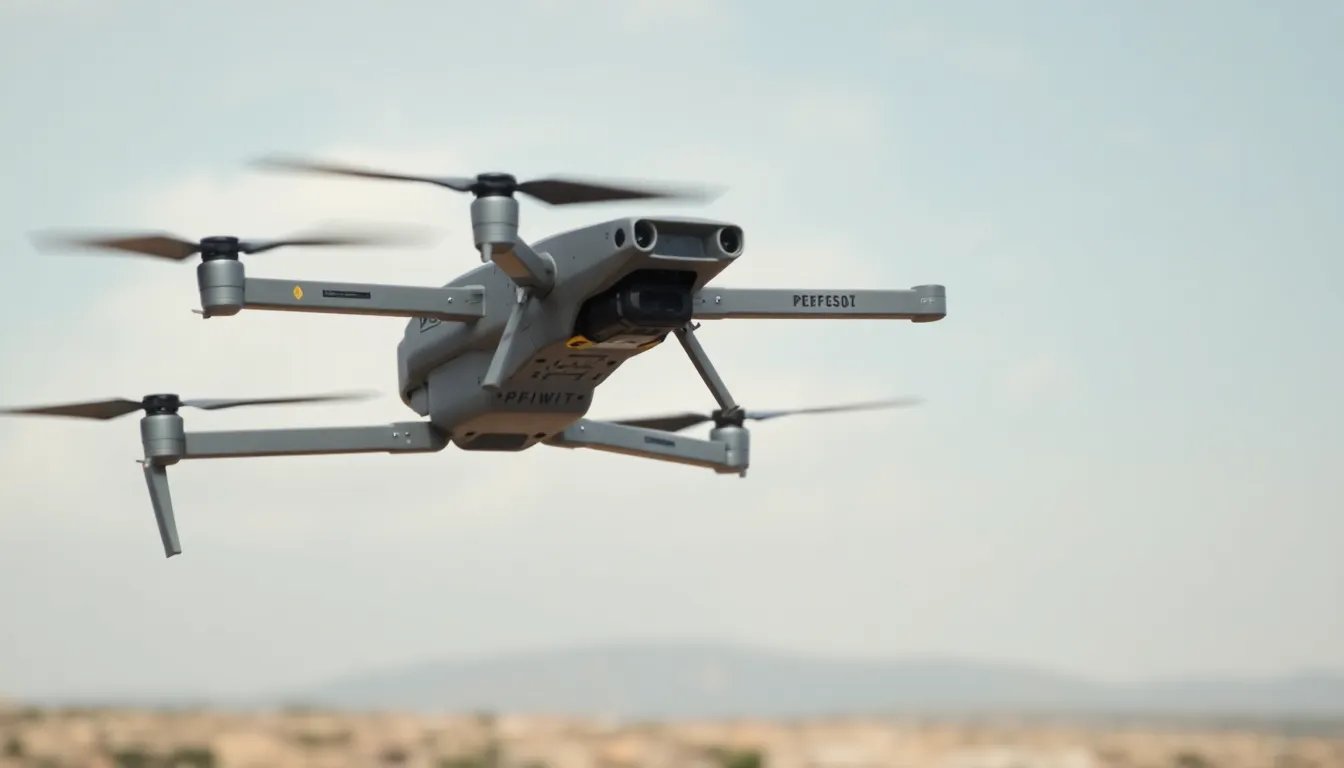
One of the standout platforms in this contract is the Merops system, a compact, highly mobile counter-UAS solution that can fit entirely in the bed of a standard pickup truck. It uses radar and electro-optical sensors to detect incoming threats, then launches a small fixed-wing interceptor drone called the Surveyor. Flying at speeds up to 175 mph with a range of roughly 3 to 12 miles, the Surveyor can be operated manually or fully autonomously — even in environments where radio and GPS signals are being jammed. At approximately $15,000 per unit, it offers a cost-effective answer to adversary drones that can cost significantly more. The Bumblebee quadcopter, meanwhile, has seen extensive real-world use and delivers impressive performance, reaching speeds of around 220 mph and operating at altitudes up to 16,000 feet. Its AI-assisted targeting and jam-resistant communications make it a versatile tool. Interestingly, anyone who has used a consumer 4K Drone will recognize the multi-propeller design philosophy, though Bumblebee’s capabilities are in an entirely different league. Rounding out the lineup, the Hornet serves as a midrange strike option, extending the system’s reach for more complex mission profiles.
Why This Deal Matters for the Future of Drone Technology
The broader context behind this contract is hard to ignore. The widespread use of low-cost attack drones in recent global conflicts has fundamentally changed how military strategists think about aerial threats. The demand for affordable, scalable counter-drone solutions has surged, and companies like Perennial Autonomy are stepping up to meet that need. From a technology perspective, the innovations embedded in these systems — machine vision, thermal sensors, autonomous decision-making — represent the cutting edge of what AI can do in real-time, high-pressure environments. For the average consumer shopping for a 4K camera drone or a GPS Drone for photography and recreation, these developments are a reminder of just how rapidly drone technology is evolving across all sectors. The same core principles that make a GPS Drone easy to fly and a 4K Drone capable of stunning aerial footage are being refined and weaponized for entirely different purposes at the defense level. This $500 million commitment signals that governments worldwide are taking drone warfare seriously and investing heavily in staying ahead. It’s a pivotal moment for the industry, and one worth watching closely regardless of whether your interest lies in consumer gadgets or defense innovation.
Source: Pentagon Backs AI Counter-Drone Startup with $500 Million Deal
We are a participant in the Amazon Services LLC Associates Program, an affiliate advertising program designed to provide a means for sites to earn advertising fees by advertising and linking to Amazon.com. As an Amazon Associate I earn from qualifying purchases. We also participate in other affiliate programs.